
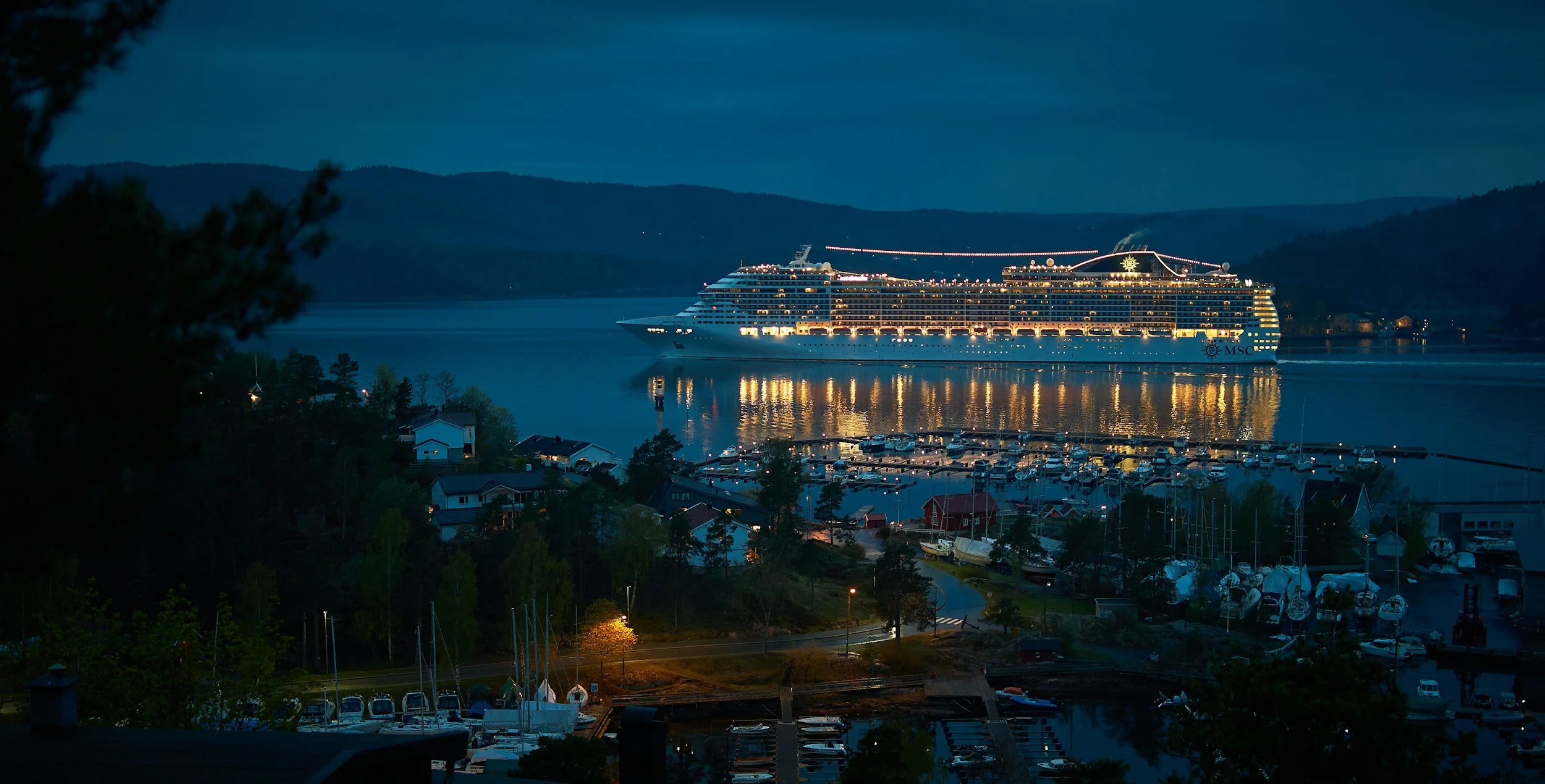
MSC Cruise Lines
MSC
If you’re looking for a cruise line that blends European flair, big ships, stylish design, and modern amenities — all at competitive prices — MSC Cruises might just hit the sweet spot. It’s not as flashy as some luxury lines, but it offers a lot of what many cruisers want: variety, value, and a rapidly improving experience.
What is MSC Cruises?
Origins & Ownership: MSC Cruises is part of the Mediterranean Shipping Company (MSC), a Swiss‑Italian parent company. Founded in 1988 in Naples, Italy, it has grown into one of the world’s biggest privately‑owned cruise lines.
Scale & Reach: As of 2024‑2025, MSC operates about 22‑23 ships, with more on the way. Its itineraries cover the Mediterranean, Caribbean, Northern Europe, South America, Southern Africa, the Middle East, and Asia.
Brand Vibe: European heritage, stylish interiors, modern décor, relatively formal (or elegant) public spaces compared to ultra‑casual lines, but still broadly appealing. There are both family‑friendly and more upscale offerings within the fleet.
What MSC Offers
Here are some of the standout features:
Ship Variety: MSC’s fleet is divided into several classes (e.g. World Class, Seaside, Fantasia, Meraviglia, etc.). Ships differ in size, amenities, routes, and vibe. Some newer ones (or those in the World Class) offer larger capacities, novel features, and more cutting‑edge design.
Modern Amenities & Design: Many ships have been built with modern design elements, including large promenades, multiple dining venues, entertainment spaces, stylish lounges, good pool/water‑feature areas, etc. Newer ships are increasingly LNG‑powered or use other technologies to reduce emissions.
Itineraries & Destinations: MSC does a mix of classic cruise destinations (Caribbean, Mediterranean) and more exotic or regionally focused itineraries (South America, Asia, seasonal Northern Europe). Their deployment tends to rotate seasonally (e.g. Mediterranean in summer, Caribbean or Americas in winter).
Family & Onboard Programming: Family programs are good; there are children’s clubs, entertainment for multiple age groups, shows, etc. Also, there are premium/“club” level options (e.g. Yacht Club) on some ships for those wanting more upscale or secluded spaces.
Sustainability & Innovations
MSC has been making notable moves toward being more environmentally responsible:
Environmental Goals: MSC has committed to achieving net‑zero greenhouse gas emissions by 2050.
Fuel & New Ship Tech: Ships like MSC World Europa and MSC Euribia are powered by LNG, which helps cut down certain emissions (sulphur oxides, fine particulates) compared to conventional marine fuels.
Emission Controls: Many ships are equipped with exhaust gas cleaning systems (EGCS) to reduce sulphur emissions; selective catalytic reduction systems (SCR) are being added or present to mitigate nitrogen oxides. Shore power capability (allowing ships to plug into electrical power while docked) is increasingly common.
Waste, Water, Plastics: MSC is doing things like reducing single‑use plastics, improving water treatment and ballast water treatment, and generally refining onboard water consumption.
Strengths & Things to Note
As with any cruise line, MSC has its trade‑offs. What you get depends a lot on which ship you pick, what cabin you select, and your expectations.
Strengths:
Good value: MSC tends to offer competitive pricing, often lower than some of the premium lines. For many travelers, you get a lot for what you pay.
Attractive ship design and amenities, especially on newer / larger ships.
Strong presence in Europe + growing in other regions, giving good variety of ports and itineraries.
Solid commitment to environmental goals and tech improvements—things improving in newer builds.
Considerations / Weaknesses:
Service & quality may vary: older ships may not have the same polish, and some guests report inconsistent service, slow dining in some venues, or crowding.
Additional costs: Some complementary offerings are limited; extras (specialty dining, shows, etc.) can add up.
“Massive ship” experience: On big ships with thousands of passengers, things like wait times, crowding at pools or buffets, and boarding/disembarkation logistics can be more challenging.
Comparisons to premium or high‑luxury lines tend to show gaps in finish, staff ratios, exclusivity of spaces, etc.
Where MSC Seems Headed
Looking ahead, here’s what MSC appears to be focusing on:
Expanding fleet further with more ships built with newer, cleaner technologies (LNG, shore power, etc.).
Increasing environmental performance via operational efficiency tools (for example, optimizing itineraries, improving energy systems onboard, better waste/water/plastics management).
Enhancing passenger experience via better amenities, more premium options (Yacht Club etc.), richer onboard entertainment.
More global expansion: deploying in more regions, more ports, possibly more focus on non‑European homeports.
Final Thoughts
If you’re looking for a cruise that delivers style, modern ships, solid amenities, and good value — especially on newer vessels — MSC Cruises is a strong option. It's particularly appealing if you don’t need ultra‑luxury but want something nicer than “just average,” and if you're okay with big‑ship scale.